This review not to go over the specs, movies, AI metering, FPS of the Nikon D7000; instead we will talk about the camera handling, auto focus, image quality, etc. I am not here to bash or stop you from getting the Nikon D7000. In fact you can order the kit here and the body only here.
My reason for getting a D7000 was for me to have a backup to my D700; in case of an emergency or just for casual use. I originally had a Nikon D90, however I found the auto focus lacking especially after using the D700. I know it’s not a fair comparison between those two, but once you get spoiled by the 51 point auto focus system it’s hard to go back. Furthermore the D90 had a huge front focusing issue with some of my lenses that drove me crazy.


Handling
After taking the D7000 out of it’s box; the camera did not feel heavy to me, instead it felt solid like my D700. I attached various Nikon f2.8 zoom lenses on the D7000 and the camera mount felt secure without feeling stressed. With a few heavy lenses on the D7000 my hands did not feel cramped like on my D90 but it still wasn’t the most comfortable for extended amounts of time.
Button Placement
The button placement is mostly identical to the D90 with the exception of a few new additions. The way to enter Live View is just the flip of the switch on the back by the red record button, I found this a lot easier to work with. The button on top of the AF/MF switch by the lens mount now acts as the way to change AF modes. Press the button on the switch and rotate the dials to change the modes and behaviors. This had me tricked for a few minutes since I was used to the button on top of the D90.
I am however extremely happy Nikon has removed the sliver covering from the shutter release button but I am disappointed that the shutter release button is a bit mushy. The D700 has a stiffer feel to it which helps me to get sharper shots at slower shutter speeds. The knob to change the camera modes are like the D90 with the addition of the User Modes. Now I am happy that they have a dial under the knob for changing the shooting and trigger modes.
Shutter
The shutter is a lot quieter than the D700, especially when you use the Q mode to slowing release the mirror after the shot. As I stated before I genuinely wish the shutter release button was a bit stiffer for me to get sharper images at slower shutter speeds. To be more specific, with a mushy shutter release button you need to push down further in order to take an image. I roll my finger onto the shutter release but with the additional pressure I apply causes the D7000 to move more than I would want it.
Auto Focus
The auto focus is definitely a step above the D90 however, please do not expect CAM 3500DX/FX performance from it. You will be disappointed! The auto focus is fast in good light but it does not have the speed of the more expensive Nikon bodies in terms of tracking. Specifically meaning that it does not readjust focus as fast to you and/or your subject’s movements. The D7000 finally has the option for changing the “focus tracking with lock-on,” how long it takes to readjust focus after something comes in the way of what you were tracking. Another plus would be the option to select AF-C priority selection to focus now instead of only release like on the D90.
I tested the D700 and D7000 on the same dimly lit scene to see the differences between the two. The D700 was able to pick up the my selection easily with both the outermost AF points and the central points. On the other hand the D7000 was able to follow the D700’s feat using the central points but not using the outer most points. The lens hunting a lot using the outermost points, please do not mistake this for never being able to lock focus because it was able to when you know how to work around it’s shortcomings. In this regard, it’s better than the D90.
Image Quality
This is a tough one. The D7000 comes with more pixels than a D700 and it even has more pixels than the D90. In fact it has the most pixels of any Nikon DX camera available on the market now. So with that said, let’s start with the good:
I strongly believe that the dynamic range of the D7000 is a step above other Nikon DX cameras. I am getting much fewer blown highlights and the shadows have details in them; this could also be attributed to the new metering system but even in manual mode I was getting fewer blown highlights yet the image still had a lot of contrast. I always thought the contrast on the D90 was low, especially compared to the D700. The D7000 also captures a lot of details within the scene. That is the good part.
 click image for full resolution file.
ISO 100
Aperture Priority
Nikon 24-70mm at f8
Shutter: 1/60
Now the bad. At this point I am generally not satisfied with the sharpness of the images from the D7000, the files tend to be mushy when looking at the details up close. In order to get files that are acceptably sharp, you need really good technique with fast shutter speeds. I think a lot of people will be complaining about this very soon. The slightest shift will become obvious when reviewing your files, you do not need to zoom into 100% to see these imperfections. A mystery to me is; I put the D7000 on a tripod using the self timer, exposure delay mode, manual mode, all noise reduction off and I shot from ISO 100 up to 6400. Even at ISO 100 I didn’t feel I was getting the proper sharpness. Keep in mind I was using the Standard Picture Control with sharpening increase to 5 out of 9. I just found the details to not be acceptably sharp as I am used to with the D700 or D90.
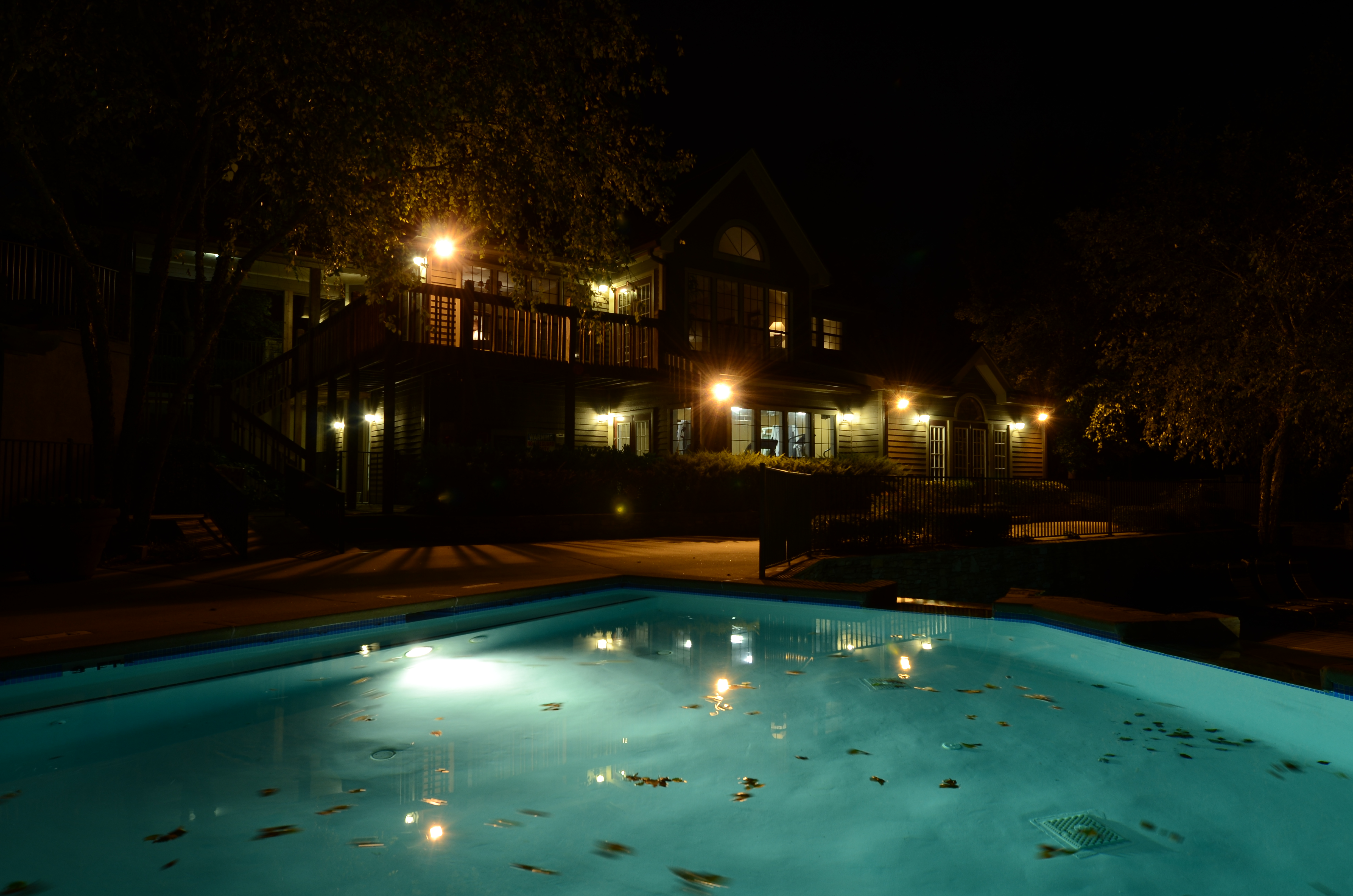 Click image for full resolution file.
ISO 100
Manual
Nikon 14-24mm at f8
Shutter: 1.6
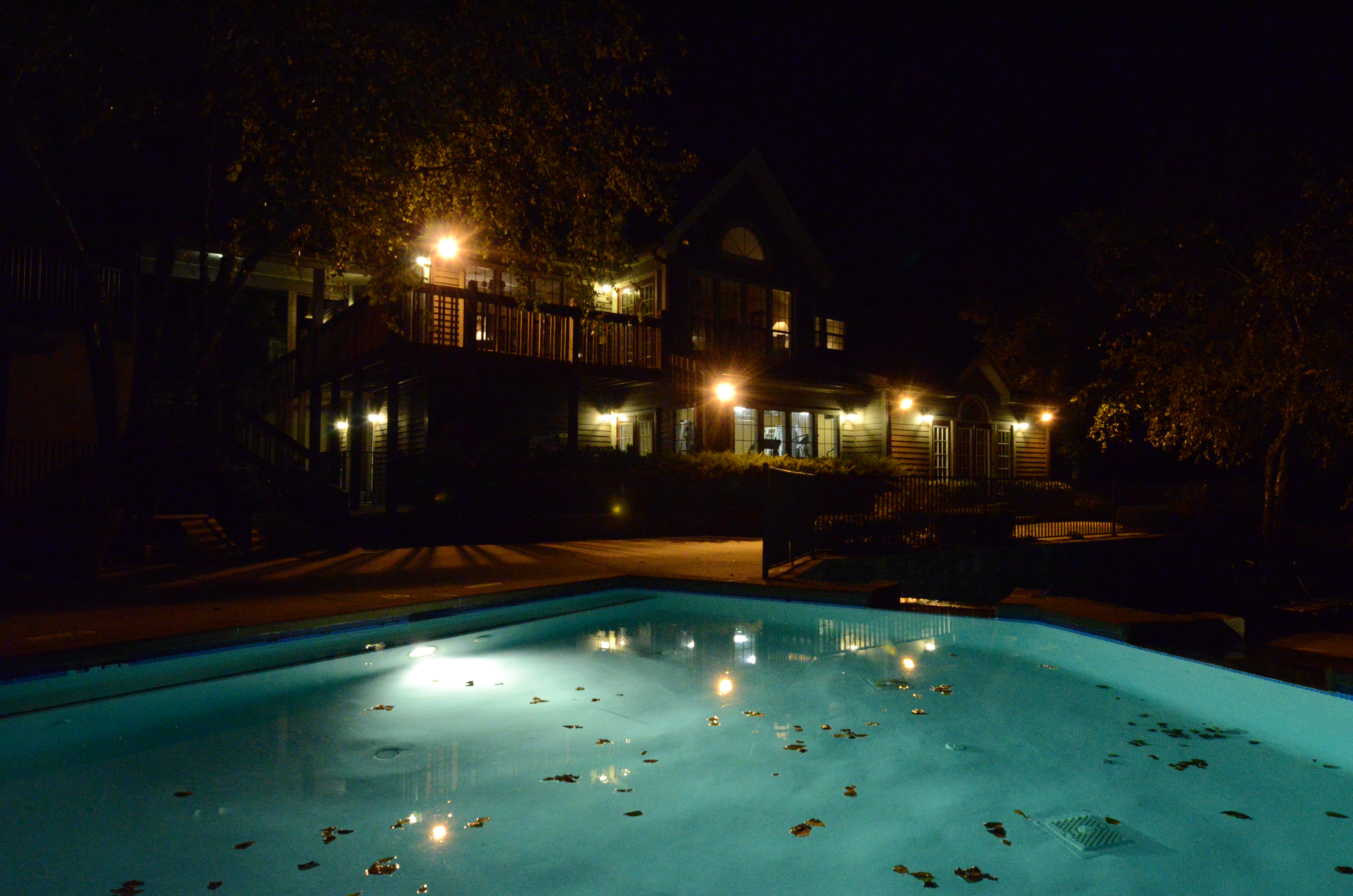 Click image for full resolution file.
ISO 6400
Manual
Nikon 14-24mm at f8
Shutter: 1/40
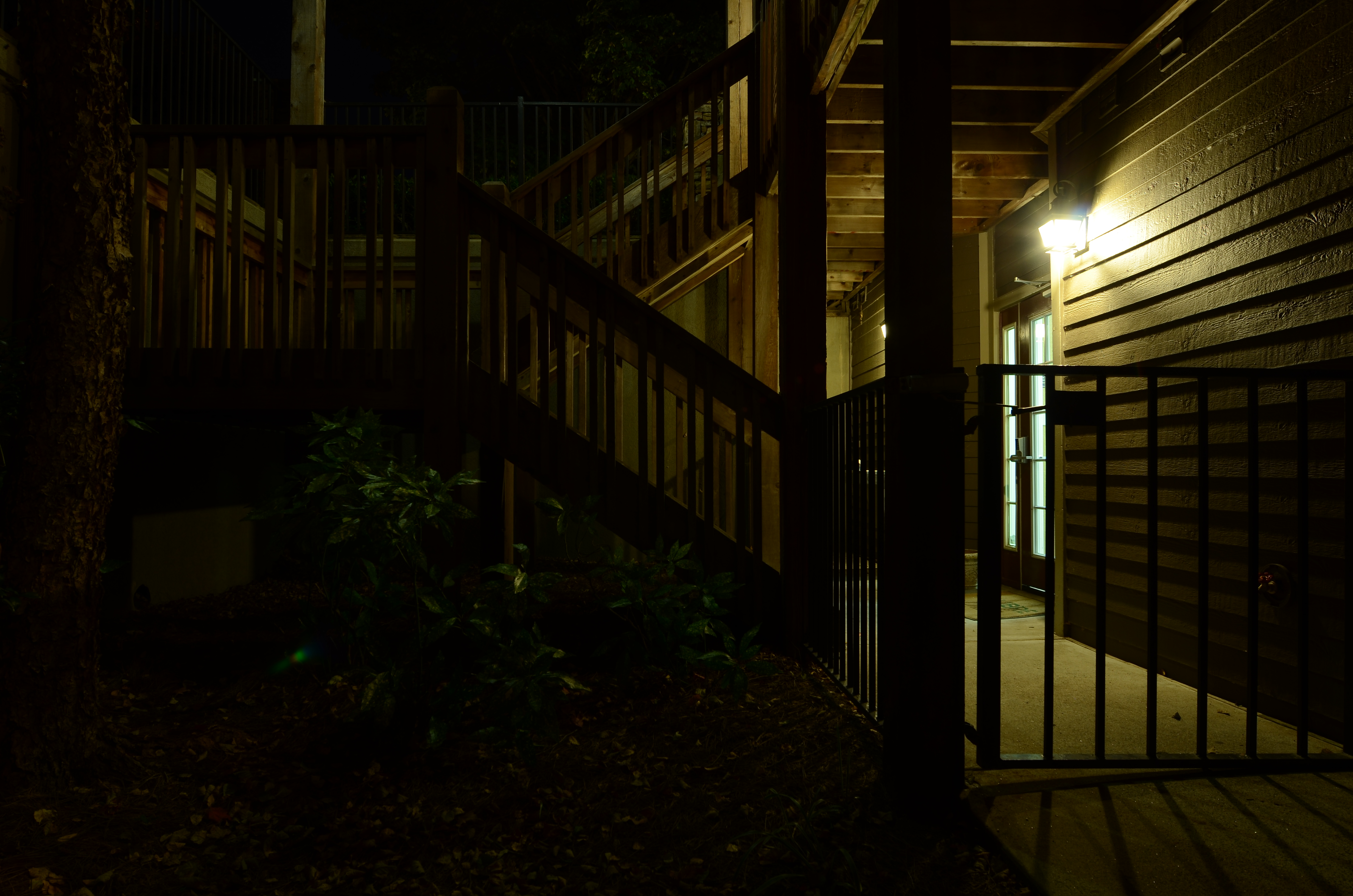 Click image for full resolution file.
ISO 100
Manual
Nikon 14-24mm at f8
Shutter: 4
I was not expecting much from the ISO 6400 image, I was expecting a lot from the ISO 100 file. The sharpness is just not there. I am sure there will always be people complaining about how I did my test, but this is the way I do my long exposures and I have extremely sharp files from the D700 to back it up. I am happy that the ISO 100 files kept the blacks black and not grainy.
Here is a sample image from the Nikon D700, this is not a comparison between the two cameras:

Click image for full resolution file.
ISO 200
Manual
Nikon 70-200mm VRII at f13
Shutter: 25s
High ISO
You can view full resolution samples of the shots above from ISO 100 to ISO 6400. Please do not expect D700/D3 like high ISO performance from the D7000, but do expect it to be better than the D90 throughout the ISO range.
Pros
- The D7000 does deliver in a being a better auto focus performer than the D90.
- The D7000 has a much needed contrast boost in the images.
- The high ISO performance is better than the D90 but less than the D700, a good compromise.
- Increased dynamic range versus other Nikon DX cameras.
- Definitely better auto exposure metering compared to the D90.
Cons
- The sharpness of images are definitely an issue.
- Mushy shutter release button.
- Peripheral auto focus points that are not the most sensitive in low light situations.
You can buy Nikon lenses and the D700, D7000 or D90 by clicking the links from Amazon.
Just released for preorder is the Nikon D800 and D800E with 36 Megapixels.
If you do buy through Amazon, drop me a line! I’d love to hear about what you picked up.
Nikon just released a firmware update to the D7000 June 30, 2011.


Comments (255)
D7000 seems like a very nice camera, but,
diffraction, getting close to 4:3 cameras in pixel density, and canon 7D…
and no f/8 example photos at nikon…
http://imaging.nikon.com/products/imaging/lineup/digitalcamera/slr/d7000/sample.htm
I will wait for D700 replacement…
I picked up the D7000 the first day it was available. I have tried repeatedly to get crisp pics out of this camera. Half of what I use my DSLR’s for is macro, particularly for small arrow frogs I breed. I have spent the past 9 days trying anything and everything to get some crisp shots and just can’t do it. I had far better results with my D5000 ( that my daughter weenied out of me now).
Love the camera if it was not for this issue but for me I can’t have soft shots of my frogs. I need to ba able to crop a photo and keep some sort of sharpness to it….and I have never need to resort to processing to achieve it in the past.
I found that sharpness adjustments beyond 5 were pointless and just made the shots harsh as Bob said.
I am not an expert and would make no claims as such, just an amatuer for the past 20 years enjoying the hobby but this is not fun. I did not read this website until a few days ago but…I had been struggling with this sharpness issue days before i read this. So I am not just tagging along and agreeing for the sake of doing so. just glad to see I am not alone in what I thought I was seeing.
I am returning mine to BB as they have the 15 day return policy which is why I buy local…hate to have to ship things back.
Now to try and rip that 5000 back from my daughter…..probably not gonna happen.
Iano,
Do you have any D7000 samples that you could link to?
I do not have any uploaded at the moment. I would think to toss them up on a photo hosting site would be a waste as they compress them….and I do not have a webpage up at the moment.
I did have this issue with both the kit lense, the 35mm 1.8 nikon lense ( close focus) and with the tokina telephoto 100mm f/2.8 at-x m100 af pro d macro.
Most evident using macro or closeup. Scenery shots were fine at 100% crop it seemed.
I tried to shoot the shots at a reasonably expected range. ISO was between 200 and 400, shutter between 1/100-1/200 depending, aperature usually around f7.1 to 9 depending again on light. Camera was tripod mounted. Targets were still…so nothing was moving. Even the frogs were motionless..they kinda freeze when you get close.
My point is that I never had to fuss so much to get such a crappy result in macro/closeup.
Again…could be me. I could not stop the lense down to say f22 but still..cmon…something should be reasonable crisp between f7.1 and 9…..usually the middle range is decent if not the best IMHO.
I may try another one when they get more in next month but will take my lenses with me and an SD card and test it first there. BB would not refund cash as they said it did not have defect issue so I got a $1500.00 gift card. So kinda stuck buying again from them.
So again this was not extreme pixel peeping in my view. I am not that uptight over it. But I have seen far better macro shots with similar quality lenses on a D40.
I’ve read up on this camera more than I really should admit to. I was in the market for a new camera (D7000 or D300s) until last night when I finally chose a D300s. People can perform tests all day to try to justify one choice or another but at the end of the day its the images that matter. Two nights ago, I shot a Goo Goo Dolls concert. I was in the pit with my little D90 and everything from a 70-200mm f/2.8 to a little crappy Quantaray variable aperture zoom. After processing the images in Lightroom 3 it became quite clear to me that I don’t need more ISO performance from a camera. The images shot at higher ISO’s (peaked out at 1600) with the Quantaray were indistinguishable from images shot at lower ISO’s (bottomed out at 400) with my 50mm f/1.8 in terms of noise. I have no reservations with printing these images at poster size. I know they’ll look amazing. One or two more stop of usable, NOT excellent, low light performance from the D7000 is not enough reason to sway my decision. I’d much rather get one or two more stops of light from better lenses (next purchase lol) I had the amazing D2H which I sold to get another excellent sports camera– D300s. I’m not saying my decision is the best choice for everyone….
I’m merely saying that everyone should take a step back and really consider if they truly NEED the higher resolution and ISO capabilities.
You write: “Furthermore the D90 had a huge front focusing issue with some of my lenses that drove me crazy.” What did you mean by that?How long did you have the D7000 in your hands? How intensively did you shoot with it?
The D90 would sometimes focus on something that was actually in front of where I wanted the focus.
http://www.clarkvision.com/articles/digital.sensor.performance.summary/index.html#FSAIQ
in theory, but pretty interesting…d7000 should be up there alongside 7D, marginally better than D300s,
but remember, sharpness and resolution is not the same, sharpness is NOT absolute, just take a few steps back, and look again.. 🙂
will be interesting to se comparison with 7D, ie on-chip noise reduction and AA-filter,
7D vs D300s on dpreview, the D300s is not far behind,
If anyone is looking for Capture NX 2.2.6, you can find it here: http://support.nikonusa.com/app/answers/detail/a_id/17041
Mac version also available.
Thanks for the review (even if your feelings about the sharpness are a bit scarry), because it’s hard for us in Europe to get a hand on the camera. I am still willing to buy it, but probably not as quickly as I would have thought.
I’m surprised there are people here who aren’t aware of the epic sharpness that the 14-24mm provides. Those people must not pay much attention in class. 😉
LOL, good one!
Robert. Thanks for the review, great information. I’ve just purchased mine last week and haven’t put it through its paces. That will happen this weekend at our annual county fair. Looking forward to it. I actually purchased mine as an in between model until the D300s successor is released. It’s a great step up from my trusty ‘ole D70, talk about post-processing. 🙂
Quick question: If this turns out to be a general problem for most users, do you or others think this is this fixable in a software update? Or is this a physical problem that will ‘plague’ this model until hardware changes are made in the ‘s’ model?
Thanks.
I think this is more of a design versus software issue.
Have fun at the fair!
Hey Rob…
Awesome Review i too find the image quality to be very poor with this camera…my d5000 took far better pictures than this?? did nikon for get about image quality here to please the idiots who thought more mega pixels would be better a than breath taking photo?? Image quality was the only reason why i shoot nikon or other than many dslr’s. Is there anything nikon can do about the image quality for this camera?? or should i upgrade to d300s or just wait it out agin?
Not really comparing DX with FX. But a lot of us are curious on how it stack up against D300/D300s.
I recently purchased a D7000 and on the LCD my images look great, but there is a color temperature difference when I go to print directly from the card or pull it up on several different computer monitors. It seems all the images are a little blue, even in auto white balance with all neutral settings. It’s puzzling because the camera LCD looks great and the colors look spot on. Did you have this issue at all or do you think it is an issue with my camera. A simple levels adjustment in photoshop fixes the problem, but I am trying to avoid that. Also, all images were shot jpeg fine. I can see the color temp change on the LCD as I go from differences in K to different settings so I know it is working in that respect, but the final image seems to vary quite a bit from the shot jpeg on the LCD. Did you notice this?
Phillip,
I did not have a problem with the WB being too cool. However, I have read some post that people were struggling with the WB being too cool.
You can adjust your WB settings to have a bias to being more warm. When you going into the WB setting in the actual menu, you can press “right” on the directional pad again to change the bias.
Robert,
Thanks, I’ll try that. However, it seems strange that the WB looks good on the LCD and is so much off in the final file. Is there anyway to tweak the LCD so I can see what is actually being recorded? I am debating returning the camera and waiting until Best Buy gets their next shipment, as unfortunately they are backordered and i can’t just exchange it now. I have added a photobucket link with comments on the photos to explain the situation in each. It seems like the WB levels are off from the LCD to the final product to me. Please let me know your thoughts.
http://s46.photobucket.com/albums/f105/humanagony/D7000/
Phillip, ofcourse the images on the camera LCD look different in a print or on any other monitor. What did you expect? Furthermore, the automatic camera whitebalance is not perfect. Just shoot RAW and set the whitebalance as you like it.
Nice write up. I actually decided on a D300s over a D7000 after I played with a D7000 in a Best Buy store. The shutter button and ergonomics are what turned me away. The D7000 felt very cramped, and the grip was quite slick feeling – can’t imagine how it’d feel after my hands started to sweat. I kept taking pictures when I didn’t want to. I was really disappointed. Now that I’ve got my new D300s, I couldn’t be more pleased. Some day I’ll have to spring for a D700 type camera…
It’s unfair to compare a D300s with D7000. The price is different and so what can you expect similar quality.
Surely, Robert, the answer is to reshoot your tests across an aperture range that would show if the concerns re diffraction are valid?
Maybe with the sharpest prime you can lay your hands on?
Cheers
Adam
Just had my hands on one of these cameras today. It is clear that the autofocus is greatly improved. Sales rep. said for sure the sensor was Nikon made. Haven’t looked at any images that I put on my card yet, so holding those opinions.
The grip is smaller and not as comfortable for my hands as the D90.
EB
I Agree.. Just made some comparison with the D300 at 200 ISO and 50mm F1.4 D at F8, sRGB, Large Fine JPG , default sharpness setting. The D300 is definitely sharper and has more contrast. More pixels do not make a better image (at least in this case) .The shutter button is to sensitive. The multifunction button and (OK) find it to small.
Shutter nice and quiet. AF fast with AFS lens not so with CAM AF. The current price is only $150 difference or less between the D7000 and the D300S. The D300S is more robust/better built.
Sticking with the D300 until a new FX body arrives (D700 X???)
Nice review! Although you compared it with D90, I was wondering how D7000 compares to D200? I have D200 and thinking about upgrading to D7000. I am not a professional photographer, but I shoot in RAW and do minimal processing in Lightroom like using WhiBal to adjust white balance, Color Calibration, Lens Calibration, etc. to make images look better.
Any suggestions?
I think the sensor is the Sony one… Sony made the D3X sensor and suddenly Sony has a new SLR out with a 16.2 megapixel chip. I doubt it is a coincidence. I bought a D7000 this week and was disappointed to see that the RAW files aren’t supported yet in Lightroom… too bleeding edge… the 16 bit TIFF image portrait I exported from RAW with the Nikon View2 software was really nice, shot with a medium sharp lens, the 24-120 VR. I’ll be trying it with my Micro lenses next week after reading this thread.
The comment on mushy shutter release button seem to me a very specific expectation from the shooter. I just got mine in the mail and found it to have a well defined transition from above shutter release to less with spring force in both places. I didn’t find any slack before the spring force of compressing to get the AF, metering kicks in. I would agree the effort is very low, but it strikes me more in keeping with a hair trigger than anything else. I wouldn’t worry about being able to find AF or avoid shutter. Obviously with Nikon’s top of the line consumer body, that’s not going to happen. However if you have calibrated your expectation of what the perfect amount of spring force is to Robert Broomfield, you probably will be disappointed. My expectations are based on previous non-digital consumer cameras and I didn’t notice some gross change. I’ve tried D90 before in the mall as well and found this camera to be much more solid in the hand, less plasticky.
To me, resolution looks the same as the D3x, just less area obviously.
I too have been disappointed with the sharpness with the D7000 and confused by all the excellent reviews. I also am finding in my own comparison tests to my D90 that not only is it much less sharp but it isn’t as good in terms of ISO noise. I’ve done a number of tests on a tripod with similar settings and the same lens and my tests are reproducible, which leads me to believe I either have a lemon or the marketing hype is not accurately depicting this cameras capabilities. It’s very disappointing since really every other aspect of the camera I like.
I would echo this same disappointment with the sharpness. I’ve done comparisons to the D90 and do see more range in the shadows in the D7000 but not as sharp at the focus point. I also notice that using Live View to focus I get what I think is very good sharpness. It seems that I have a back focus issue in view finder focusing that is not there in Live View focusing. Very disappointing.
I have the D200, D700, D90 and the now the D7000 (I also have a Canon 5D Mark ll) …. I just shot a wedding with it last week and was very impressed with IQ from this body. I personally find the D7000 to be capable of superbly sharp detailed dramatically clean color images…with one of the best sounding shutters in the business. Extremely quick foolproof focusing.
Shutter release is fine, I do not notice “any” issues with it. You may have a retarded example…I am sure we will see what other say as time goes on. DxO labs will have at it soon.
Went to NYC expo ,talked to Nikon booth and they raved about this sensor,but ….i get shaky over small pixels.Which camera gives best resuits with DR etc……???
I suspect D700,D3s or maybe sugma sd 15??? presently.
I dont know ,i am askinG???
I was thinking of using the D7000 as my primary camera for weddings. I have used the D200 (own it) and the D700(rented it) for weddings and have come to the conclusion that sharpness is really a factor of the lens and the photographer not so much the camera body. That said I’m glad to see someone suggesting that the D7000 is a good camera.
Thanks – nice to see an early review especially against the D90. My D90 still fails to impress me over the D40 in WB and exposure issues especially in daytime use. I had been thinking of ebaying the D90 for the 7000 but maybe not…frankly for general amateur use between the hours of 10-16:00 I’ve resorted to a quality Digicam where iA setting works better than the D90 on any setting unless I have time to check EV and set as necessary, which frankly you don’t always! I find if the D90 blows exposure by this much (3) RAW isn’t much use! I’d never rely on the D90 for a professional job especially if speed, as in action or movement, were at issue!
The comment from the pro shooter above about possible inconsistency between cameras leads me to a view I have about ny D90 as out of 3 of us in a small camera club with the camera, I’m the only one who doesn’t love the D90 to bits. But then I am the only one with 2 very consistent D40s. If only the D40 had a bit more resolution for when you run out of lens zoom and have to crop, had a less annoying screen habit (constantly popping on to show settings) or a top mounted screen and oh yes a dust cleaner and a lens motor I’d never have upgraded, though I still don’t think the D90 is an upgrade rather a move forward and backwards all at once (my mates went from either a D50 or no dslr to the D90 and hence the love I suspect). The flash sync speed of 1/500th tops is still a major winner on the D40, I find the D90’s desire to want to use flash at 1/60th weird and unreal even with the VR 18-105mm kit lens attached – it’s very clsoe to my shake limits and am unhappy the D90 doesn’t go above 1/200th. Incidently 18-105mm VR’s seem unloved but I find it a good kit lens and think the lack of love is something to do with the IQ of the D90 – I haven’t been able to really get a picture style I like, but sharp 7 works well! The 18-105 gives good results on the D40 and for most situations can easily replace the 18-55 + 55-200 VR I used with the D40. Another mate uses the 16 – 85mm lens on the D40 which is where I think I would have rather spent the D90 cash in some ways!
Whilst I like the Nikon lens quality, especially from the DX kit lenses and less expensive non-motorised film era 2nd hand FX’s e.g. 28-80mm and 70-210mm zooms, I am less impressed with the digital cameras all round performance and find the latest (Digic3 onwards) Canons either digicams or dslr to be more consistent performers with less wow maybe, but fewer fluttering variations than Nikons. Having said all that the digicam I’ve borrowed from my wife, the Lumix TZ10 is what I now pick up for good daylight use leaving the less loved D90 for lowlight work or studio type situations where it might be useful, although the Digicam out perfroms it on general domestic macro work, like photographing a makers mark on a silver spoon (it virturally renders my nice but not often used 100mm macro lens redundant)! Due to its low weight I like the recently acquired F65 for b&w film use, and really think its about time digital DSLR’s were coming out at this weight, standard and quality, if not I’ll be looking for a larger sensor TZ10 type with the lowlight ability of D90 but none of the highlight blow outs the D90 looses control of, but where the TZ10 still hangs in on! Printing at 6×4 I found you can’t pick the Lumix from the D90 when used side by side in good daylight with the Lumix on iA and the D90 on Aperture f11, ISO 200 or 400 with control of highlights and possible ev adjustment!
At the end of the day I need a camera thats reliable, consistent and quick to use, the D90 fails frequently, the Lumix doesn’t – unless Nikon and Canon get a grip on these issues the days of expensive DSLR’s and their lenses are numbered, I simply can’t be bothered to drag the D90 and a selection of lenses around unless, like a forthcoming dayout, I am going to be working indoors in lowlight where the D90 will perform better than the Lumix. However I can’t haul a large camera bag with me for security and weight reasons so its going to be D90 wearing the wide angle (about 1.2 kilos total), proabably kit 18-105 in small shoulder bag, just in case I need somehting longer than 16mm and on my belt the TZ10 and maybe I & security won’t notice the F65 & 28-80 around my neck as well. In fact I wish the D90 weighed in at the F65 weight! The Dx wide angle actually works on the F65 when used at 16mm and is of course beautifully wide so it’l probably get swapped over.
Somehow I really don’t think Nikon have gone anyware much since the brilliant D40……..the D5000 should have had a lens motor as in fact should all Nikons!
Oh yes the D90 has been back to Nikon for checking and adjustment, they say its within manufacturing spec and thats it – somehow it’d be nice if they really cared but you don’t get that impression and I find the queue of professionals who seem to think its OK to have to take Pro grade cameras in for stupid repairs a little off putting. Indeed if my laptop was as unrelible as one of their techies implie,s then that company would be out of business! Incidently I have never had to take a Canon Digicam in under waranty, I have taken 2 Nikon DSLR cameras in and one lens back twice, the lens was again judged as within manufacturing tolerances. 3 times my be my limit of; enough is enough! I had hoped the D90 replacement would be a D40 moment but I suspect not, less marketing more actual quality might be something Nikon could really use!
I have just returned my D7000 since I wasn’t pleased with the picture quality compared to my D90. As mentioned previously, I did several comparison tests confirming the picture quality was worse. When I returned it I had several workers look at me like I was crazy but after they ran their own tests agreed with me that there was something definitely wrong and indeed not as sharp as the D90. The refunded my money and will be sending it to Nikon. This could explain why there are some negative reviews and discussion about “soft focusing” or not as sharp as other cameras. I guess that’s kind of good news for those on the fence, in that the camera likely is worth getting and some of these abnormal findings could be related to a certain percentage of cameras released with some type of focusing or vibration issue. Overall I liked every other aspect of the camera except for one other thing which should be considered by prospective buyers. Even though the camera is a little larger than the D90, the actual grip itself is less substantial. I noticed my wrist bothering me after a week of use and figured out it was likely related to the grip.
If anyone still doubts the ability of the D7000 to shoot superb stills and or killer video I would suggest checking out the “Chase Jarvis” D7000 in the field test video’s/stills before you count this camera off your short list. 😉
http://blog.chasejarvis.com/blogpics/Nikon-D7000-Photo-Gallery/
http://blog.chasejarvis.com/blog/2010/09/nikon-d7000/
Ok now we are seeing the real deal…many extremely sharp, superbly detailed images posted from this camera using mediocre lens…so as my own tests showed this camera is superior in detail/sharpness to my D90 and as good as the D700. Color and contrast, speed and features are all also better not to mention a long list of other benefits over both the D700 and the D90.
It will sell like crazy…one con is it doesn’t work with some 3rd party lens. I have an older Sigma 105/2.8 DG Macro (very sharp lens) and it will not work on the D7000, works fine on the D90….Nikon would not tell me why, possibly something to do with the CPU deal.
This is a solid performer which ups the anty for the big boys!
Yeah, the 14-24 and 24-70mm are “mediocre.” Sigh.
But no matter what camera and lenses Chase Jarvis used, every image would be “sharp” at those small sizes.
Look at this crop
http://lh5.ggpht.com/_gZ5J5b1gyCQ/TNTctfXb1BI/AAAAAAAAAM4/wwFb7bOZYzg/nikon.jpg
Do you still think that the image is soft?
Get the RAW files and check.
http://www.imaging-resource.com/PRODS/D7000/D7000A7.HTM
That’s not a 100% crop. Not even close.
I don’t think the Imaging Resource “Comparometer” is a good image quality comparison site. They’re not very consistent, IMO. But yes, I think the image looks (too) soft when viewed at 100%.
I’m shocked. Soft compared to what? It exceeds the resolution and clarity of D90 and D700. Use the right software.
Should use the Camera Raw 6.3 beta. Do not use Capture NX 2 or ViewNX 2.
Keep in mind that you compare a 16MP Image with an 12 MP Image. Size up the smaller Image to 16MP and then compare the details!
Like many things, it perhaps reminds us that the early production lots of new model cameras are inferior to later lots as QA also improves. And it might be a case of waiting for the inevitable upgrade to the in camera software. The Canon 5D Mk2 is a case in point. Current production and v2 software made a difference.
Logically it should really be superior to the D300s and inferior to the D700. However, D700 used prices have dropped below the $2k mark so that’s pretty tempting if you can get a low use example..
Looks that nikon produced a canon in a body of nikon.
I still don’t understand why this camera is better than the 550d (except the 39-pt autofucos).
I really like nikon , but expected more , specially from the image quality.
In a blind test based purely on technical picture quality, I probably wouldn’t be able to distinguish the two cameras – only thing that might give me a hint is the Canons tendency to have slightly more saturated, brighter colors and maybe a tad more contrast than the Nikon – this is probably a matter of camera settings/calibration. This personal view is based only on available test shots on http://www.imaging-resource.com and my uncalibrated monitor.. also, I’m still using my old Nikon D40 and probably has a lot to learn about high res. sensors 🙂
When it comes to camera features it’s definetly a question of what you need – I’m looking at the Nikon D3100 as an upgrade option in stead of the D7000 because I don’t think I actually need the extra features and picture quality is (to my eyes..) very similar.
I’m also disappointed to read that the D7000 might have an issue with sharpness – on a good tripod with self timer etc. it should be sharp ..
http://www.dxomark.com/index.php/en/Camera-Sensor/All-tested-sensors/Nikon/D7000
It seem the sensor has almost 14 EV ! 🙂 Better than D300s and D90
I own a Nikon D2X and I want to sell this camera so I can buy the D7000.
Is that a good descision?
Greetings from The Netherlands,
Ruud
I think you are better off with the D2x.
You’re joking right?
About?
a good question, actually,
technology has improved so much..
sure, you are not going to get the rugged body ..etc.. and if that is important, stay away from d7000s..etc.
image quality and resolution your priority ?
look at the 7000
There is one comment that says that using live AF, images are sharp… therefore can be possible that people who doesn’t get acceptably sharpness have not well graduated the optical viewer (throught the wheel)?
How do you take the photos that are not sharp, using AF focus or Manual focus?
Or perhaps there is a front-focus or back-focus problem on your lents and your D700 corrects this problem and D7000 doesn’t?
The viewfinder calibration only affects what _you_ see, not what the AF module sees through the lens. When the AF makes a good lock, the shot should be in sharp focus where you expect it to be.
Any issues with good focus lock producing poor results probably means lens calibration problems (aka front/back focus). Those can be fixed with the AF Fine Tune option in the D7000 (Menu/Setup/AF Fine Tune).
I definitely agree with your statements.
I am a beginner in dslr and read a lot of positive reviews about the d7000 and decided to order it. But now I am a little bit confused about most of the comments here about the sharpness of the D7000. Would it be better to buy a D300s instead of D7000? Thx
Pat,
What kind of photography do you do?
I am interested in portraits, landscapes, nature, animals and mabe from time to time in sports but this only very rarely
Hi, I have nikon d90 and I am planing to replace with d300(s) or d7000, I am shooting sports and i noticed that AF on d90 is little slow, so my main objetcs are good hi iso( at least 1600 or max 3200 performer) and good AF(most important), does the AF on d7000 is good as on d300(s) and how about hi iso performance?
Thanks
i think the AF is far better on the D300s. Cam 3500DX is the best AF in the market, I suppose.
Af is same in d300 and d300s?
but I think that d7000 have better hi iso(1600 and 3200) than d300/(s)?
AF on D300(s) is the same. Nikon Multi CAM3500DX 51 point. On D7000 you can find new Multi CAM4800DX 39 point. Yes, this is main problem. Nikon D7000 has better performance from ISO 3200 up to higher levels. But ask yourself… “You really use Higher ISO than 3200?” I think, the performance up to 3200 is just slightly better than D300s but …
D300s grip has programmable AF-ON button.
D300s also has virtual horizon (but only on the LCD I think)
D300s also has grid display on the viewfinder
D300s has 64% more buffer memory for burst shooting: 18 vs 11
The 16MP files take longer to open in Lightroom 3 than the 12MP. In my computer the difference is pretty noticeable so if you don’t need the additional megapixels, the larger file sizes can slow down your workflow.
There have been posts by one or two BIF shooters that report that the D7000 AF did not match the one in their D300. More important than 51 vs 39 AF sensors is that on the D300s 15 are cross type while on the D7000 there are only 9 (66% more on the D300s).
Pro d7000
better high iso performance
much better video performance
better metering
newer tech
lighter
smaller size
Pro d300s
better built
more professional buttons
better and faster auto focus
better grip
smaller file sizes
ability to use CF
Jan,
Thanks for replying to Zoran.
thank you very much, I will buy d300.
I have found the D7000 to rival ALL my other Nikon DSLRs for my uses. I just sold my D200 AND D700 bodies and am perfectly satisfied.
For my night shooting needs (low ISO on tripod for perfect shots OR high ISO handheld in the dark just to catch scenes where detail quality is less important) the D7000 functions every bit as well as the D700.
I keep hearing about the sharpness issues with the D7000 but I haven’t experienced any of them. Your samples of the swimming pool view don’t offer enough areas of intricate detail to judge sharpness. The tiles around the pool edge look fine. The D700 skyline shot is an excellent test.
One of my D7000 shots:
This shot was made with the low factory sharpness setting (4?) and was quite overexposed in the highlights.
http://www.flickr.com/photos/wade_bryant/5126974423/in/set-72157625267158188/
I also took a shot very similar to the D700 example you’ve posted (Miami skyline). I’m going to take a closer look at mine for comparison, but I believe the details are comparable.
I think the D7000 AF is as good as the D700 in daylight, but more finnicky in the dark. I agree that the outboard focus points don’t seem to catch things at night as well as the D700.
The only slight complaint I have about the D7000 is its inability to meter in near total darkness like all my other Nikons hav been able to do (minor inconvenience).
Wade,
Your photo is the D7000 and mine is D700. Both photos were taken at 135mm, assuming you were using the 70-200mm VRII, of downtown Miami at night from Key Biscayne. Mine was looking to left and yours to the right.
You can easily see the difference in sharpness (D7000 sharpness 4? versus D700 sharpness at 5 with no post sharpening) and noise (D7000 ISO 100 versus D700 ISO 200).
Your thoughts?
D700 http://www.flickr.com/photos/robertbromfield/4464301144/sizes/o/in/set-72157617384956031/
exif: http://www.flickr.com/photos/robertbromfield/4464301144/meta/in/set-72157617384956031
D7000 http://www.flickr.com/photos/wade_bryant/5126974423/sizes/o/
exif: http://www.flickr.com/photos/wade_bryant/5126974423/meta/
My lens was an old 135m AI f/3.5 manual focus lens, so I don’t know how that affected my shot. I don’t see a difference in the tiny details like small railings, etc.. The overexposed areas on both our images tend to blur the detail (in the lit building windows, etc..)
The linear details in both shots is more than sharp enough for any print size I’ve ever contemplated.
I believe I have another shot of the same buildings as yours that might provide a better apples-to-apples comparison.
I wish I’d kept my D700 to try some more accurate side-by side comparison tests.
Thanks for the reply.
What kind of monitor are you viewing the images on?
I am using a Dell Ultrasharp 24″ 1920×1200.
Wade,
I wanted to add that I like your photo a lot.
They both are very nice photos. Great job guys. (Wade and Robert) . It all comes down to what you are you using your camera for. I said the D700 colors rendition is more smoother and the overall picture is better IMHO. However Wade’s D7000 is not bad either. To sum up if you are using your camera just for fun and post your photos to flickr the D7000 is more then enough. If you make money off of your photos the D700 is the way to go.
Best
DUY
I looked at Wade’s work on flickr and I like his work a lot also.
They are nice. Kudos to Wade, and your photos are nice too Robert. I’ve looked at your D7000 photos and they are sharp (I think). I have never shot with a D700, so I can’t tell the different better DX and FX. Is the IQ that better on the D700? I wanted to to buy a D700.
Ah yes – big difference,
I was viwing on a business laptop. I opened the images up on a Dell 2410 (same as yours?). Now I’m seeing some differences between these two shots. I also opened up one of my old D700 night skyline shots and it looks less sharp than your D700 photo too. I shoot almost everything in jpeg NORM and I usually shoot with non-pro zoom lenses. Seeing your photo on a great monitor just made me want to raise the bar on my image quality. With all the variables, most notably sloppy technique on my part, I’m still not convinced that the D7000 is not shooting sharp. I’m going to pour through some of my other comparable D7000 shots tonight to see if I have some that are sharper. Do you think jpeg NORM vs. HIGH makes a big difference? I’ve also never ventured past f/8 for night shots. I noticed your Miami shot was at f/13. Do you think that makes a sharpness difference?
Were you able to go through some of your previous shots for comparison?
Regarding the different jpeg quality differences, I am unsure if it will make a difference regarding sharpness. I have never tried any other setting outside of HIGH.
Since the objects are distant and you are focusing at infinity, f8 should be fine.
Its funny folks are comparing a APSc sensor to an FX sized sensor albeit 4 more MP….This says allot for the picture quality of the D7000…somewhat moot….?
That aside I would prefer the variety of features of the D7000 over the D700. I’d say Nikon has hit the mark superbly. This is a seriously fun photographic tool! Let it go and wait for the D800 😉
D7000 is Great DSLR Camera. I buy one and enjoy to use it.
The standard setting on picture controls is 3 for sharpness . Have you tried adjusting up to 6 ?
David,
If you read the review, your question is covered.
Very thorough and informative review . I read that you went to 5 out of 9 so I guess that does answer my question of whether or not you went to 6 . Thanks .
Rob,
I’m seeing the exact same thing on my D7000 (my second, first went back for same problem). Try using LiveView and I bet you get lovely sharp images, it’s just though the OVF that you get the soft blurry images. I’m now in a dilema of swapping this one for a third, sending of to Nikon, or getting a refund!
Craig.
D7000 isnt in the same class as the D700
D7000 is a Advanced DSLR and the D700 is a Professional DSLR it’s like not the same price range and not the same thing
its like compare a Honda civic with a Ferrie ,everone knows how to drive a Honda but not everone know how to drive a Ferrie for whats it’s made for .thant being said both are ever ever good DSLR’s its all about what you want to do with it .i have both and i think both DSLR’s are great for there class
It more like a Honda vs. Acura
Well, I own both a Honda and an Acura…
Just found your site after looking up “D7000 not sharp”. I went to a Nikon exhibition this morning and plaeyd extensively with the D7000. Compared to the D300s that I took along, I studied the pics afterwards. In terms of ISO, WOW! The D300s was a nasty soup of colour and raging noise at 3200 and the D7000 was smooth. HOWEVER, the D300s was sharp and detailed. The D7000 was much softer in all photos, whether JPEG or NEF through VIEWNX2. There is no reason for this. I’m torn because I don’t think the ISO performance is worth the soggy-looking details. Think I will stick to the D700 for now which is my main body!
@Lord Beau
What was the Noise Reduction settings on both cameras? I felt the same way about the D7000, the noise looked good but not sharp. I found out turning NR off up to iso 1600 and Low over iso 1600 is much better. I shoot raw and convert to jpg and resize to 1920×1200 to view full screen and the noise and sharpness is excellent. Plus, the dynamic range at high iso is fantastic.
First thanks to Robert for this profound review.
A friend of mine switched from the D5000 to the D7000 recently and now has the same issue with soft pictures. Strangely it is not in general but affects the majority of shots. I think we will see a firmware update soon.
I am always amused reading comments where someone takes a shot and it satisfies him and draws conclusions out of it “Do you still think it soft?” Well that depends on what you compare to, isn’t it?
But what I saw from my friend”s D7000 is noticable softer than from my D300S with the same lenses btw. And hey this is not an offense it is just an opinion and sometimes as in Robert’s review based on solid comparison.
So give it a break and consider.
Best
Bernd
Thank you Bernd for your observations.
Ok, I apologize for the low-tech nature of this discussion, but I’ve been reading review/blog/discussion after r/b/d for the past two months trying to decide to upgrade either to the D90 or the D7000 from my maxxed-out Canon p/s. Your discussions have been tremendously helpful, and have directly much of my own research. I had settled on the D7000, until the multiple posts about the D7000’s lack of sharpness began to increase. I shoot alot of sports, beach, and portraits (for family and friends, not for income) …and use Photoshop for editing…..
Is the sharpness issue something I will notice (as a bonafide amateur) as an enthusiast/dad, or is it more of an issue for the more skilled and experienced photographers, as I gather represent most of the contributors to this discussion ?
I really like the dual slots, the clearly faster AF of the D7000, the external mic jack, and the faster fps…..but ultimately I want great photos, even if it means going with a much more affordable D90, albeit with some shortcomings…..
thanks for the outstanding discussion…..
I believe the sharpness issue here will mainly be a bother to those who demand critical sharpness. I regularly print 20×30″ prints, so sharpness is a must. On the other hand; if you are looking for an upgrade from a point and shoot, you will be fine with the D7000. If you are looking for top notch auto focus for sports in DX format, the D300 is the way to go.